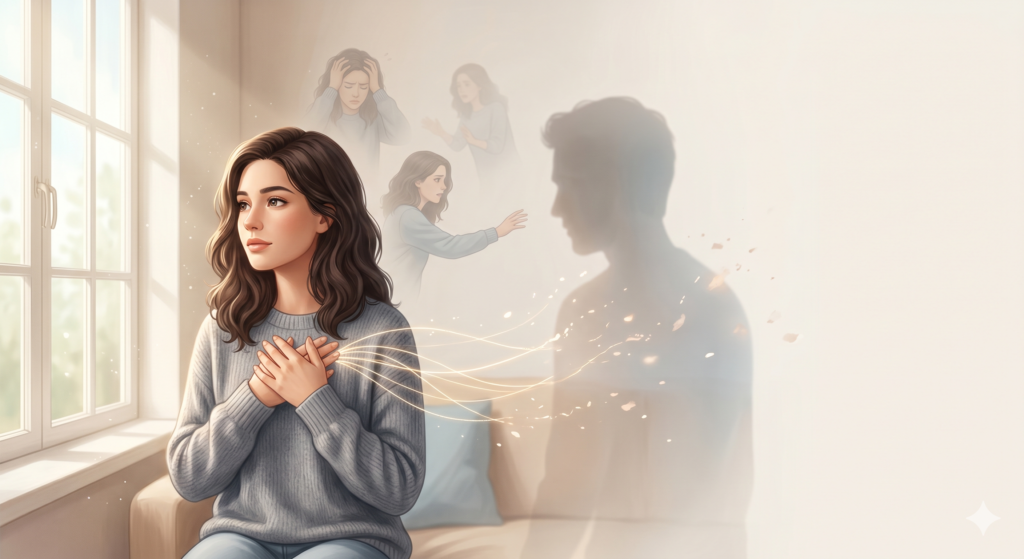
Let’s talk about healing attachment wounds in romantic relationships—not in theory, but in real life.
You meet someone good.
They’re consistent. They show up. They care.
And instead of feeling safe…
You feel:
- anxious
- unsure
- overwhelmed
- or suddenly distant
You start overthinking texts.
You question their intentions.
Or worse… you push them away.
Here’s the truth:
👉 You’re not sabotaging love on purpose.
👉 Your attachment wounds are trying to protect you.
But what protected you once…
is now ruining what could actually be healthy.
How Past Love Shapes Present Behavior
Your current relationship isn’t just about your partner.
It’s influenced by:
- past heartbreak
- inconsistent love
- emotional neglect
- rejection
So when your partner does something small…
Your brain reacts like it’s something big.
Because it’s not about them.
It’s about what it reminds you of.
Common Signs You’re Sabotaging Love
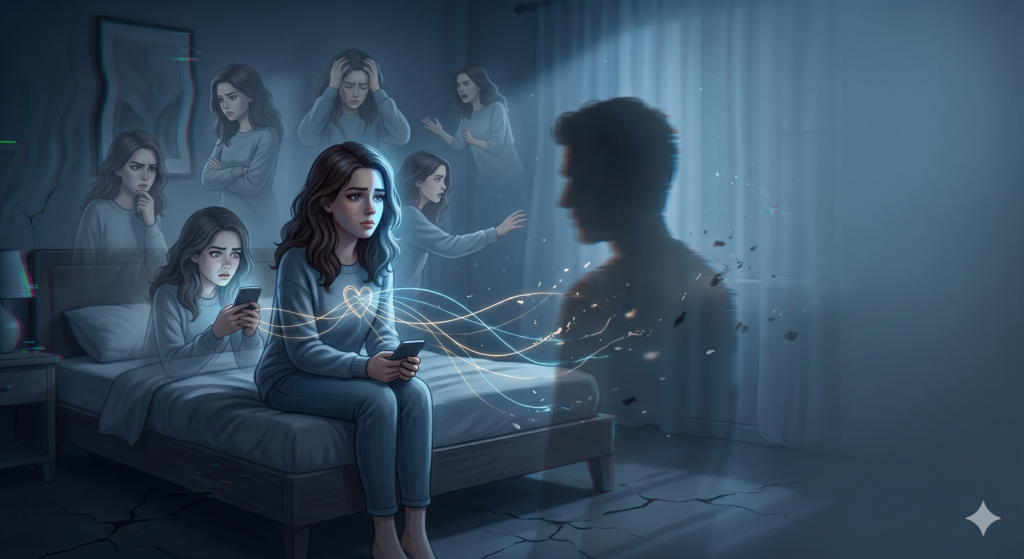
In romantic relationships, this looks like:
- Getting anxious when they don’t reply quickly
- Pulling away when things feel “too real”
- Starting arguments over small things
- Needing constant reassurance
- Doubting their intentions
- Feeling uncomfortable when they treat you well
If this feels familiar…
You’re not alone—and you’re not stuck this way.
Why You Sabotage Healthy Romantic Relationships
Fear of Being Left
You think:
“If I don’t get too attached, it won’t hurt.”
So you:
- become clingy
- overanalyze everything
- panic over small changes
Fear of Being Seen
You think:
“If they really know me, they’ll leave.”
So you:
- hide your needs
- avoid vulnerability
- act distant
When Healthy Love Feels “Boring”
This one confuses a lot of people.
Healthy love feels:
- calm
- stable
- predictable
But if you’re used to chaos…
Your brain says:
“This feels off.”
So you:
- create drama
- lose interest
- or sabotage it
Attachment Styles in Romantic Relationships
Anxious in Love
- Needs constant reassurance
- Overthinks everything
- Fears abandonment
Avoidant in Love
- Pulls away when things get serious
- Struggles with vulnerability
- Values independence over closeness
Disorganized Patterns
- Wants love but fears it
- Push-pull behavior
- Emotional highs and lows
Secure Love
- Feels safe with closeness
- Communicates openly
- Trusts consistency
Healing Attachment Wounds in Romantic Relationships
Step 1: Recognize Your Patterns in Love
Start noticing:
- When do I get triggered?
- What do I assume in those moments?
- How do I react?
Awareness is where healing begins.
Step 2: Pause Instead of Reacting
When something triggers you:
Don’t:
- send that emotional text
- jump to conclusions
Instead:
- pause
- breathe
- give it time
Your first reaction isn’t always the truth.
Step 3: Communicate Needs Honestly
Stop testing your partner.
Start saying things like:
“Hey, I felt a little anxious when I didn’t hear from you. Can you reassure me?”
That builds connection—not confusion.
Daily Habits to Build Secure Love
Emotional Regulation in Relationships
Your partner is not responsible for regulating your emotions.
Learn to:
- calm yourself
- sit with discomfort
- not react immediately
Self-Soothing Instead of Clinging
When you feel the urge to chase:
Pause and ask:
“What do I need right now?”
Then give it to yourself first.
Setting Boundaries in Love
Healthy love includes boundaries:
- “I need consistency to feel secure.”
- “I don’t engage in unclear communication.”
How to Stop Sabotaging a Good Partner
Stop Testing Their Love
Ignoring them to see if they chase?
Creating distance to feel in control?
That pushes away the very thing you want.
Stop Creating Problems
Not every situation needs:
- analysis
- drama
- reaction
Sometimes:
👉 It’s okay.
Learn to Feel Safe in Stability
This is the hardest shift.
You have to get used to:
- calm
- consistency
- peace
Without trying to disrupt it.
Real-Life Relationship Scenarios
When They Don’t Reply Fast
Old reaction:
“They’re losing interest.”New response:
👉 “They’re probably busy. Let me stay grounded.”
When Things Start Getting Serious
Old reaction:
👉 pull away
New response:
👉 lean in slowly and communicate
When You Feel Like Pulling Away
Ask yourself:
“Am I protecting myself… or sabotaging something good?”
Self-Worth & Love Patterns
Why You Accept Less in Relationships
You don’t accept what you deserve. You accept what feels:
👉 familiar.
Becoming Someone Who Chooses Better
Healing isn’t just about letting go.
It’s about becoming someone who:
- doesn’t chase
- doesn’t settle
- doesn’t abandon themselves